JUST ANOTHER FISH
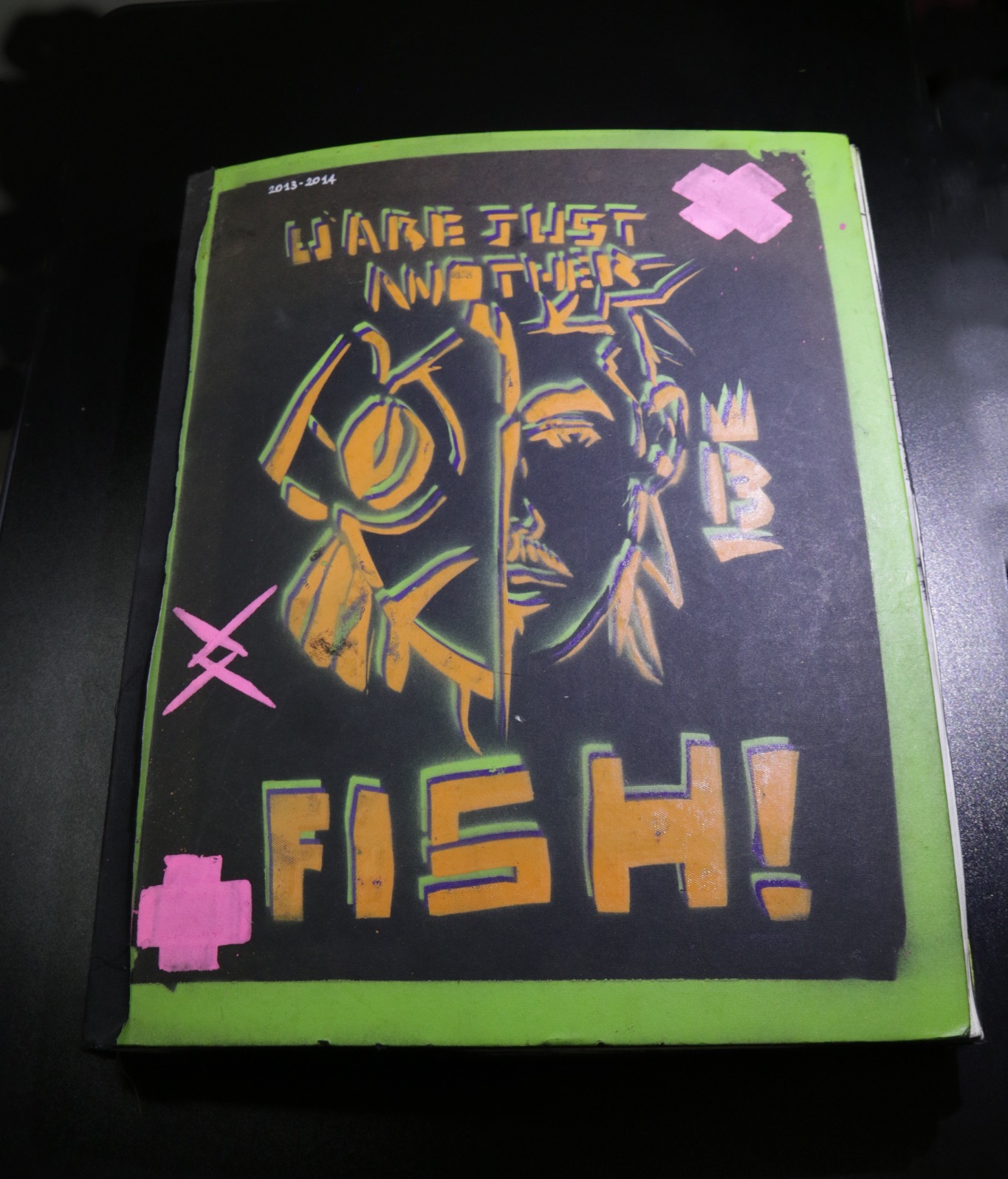
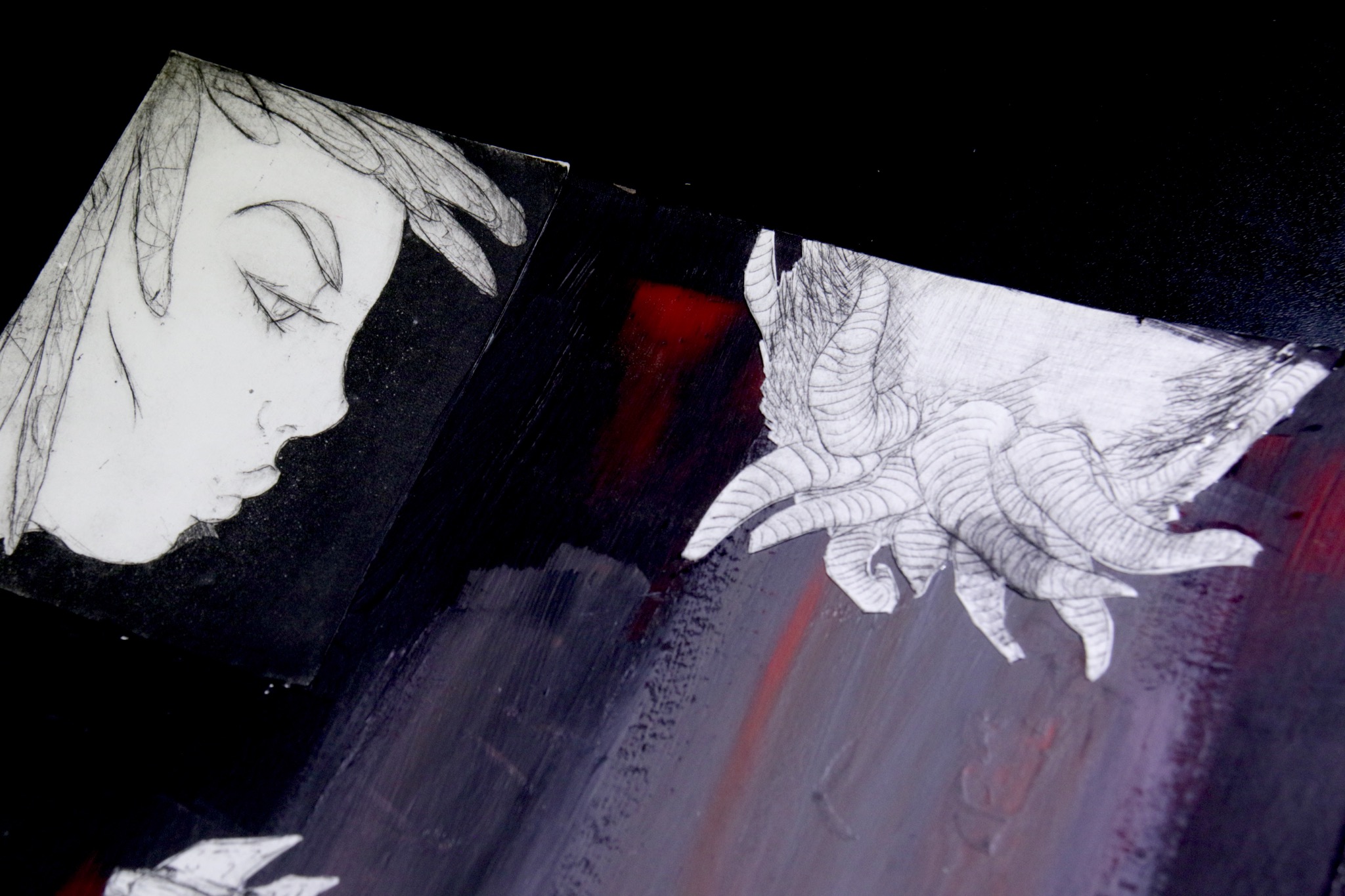
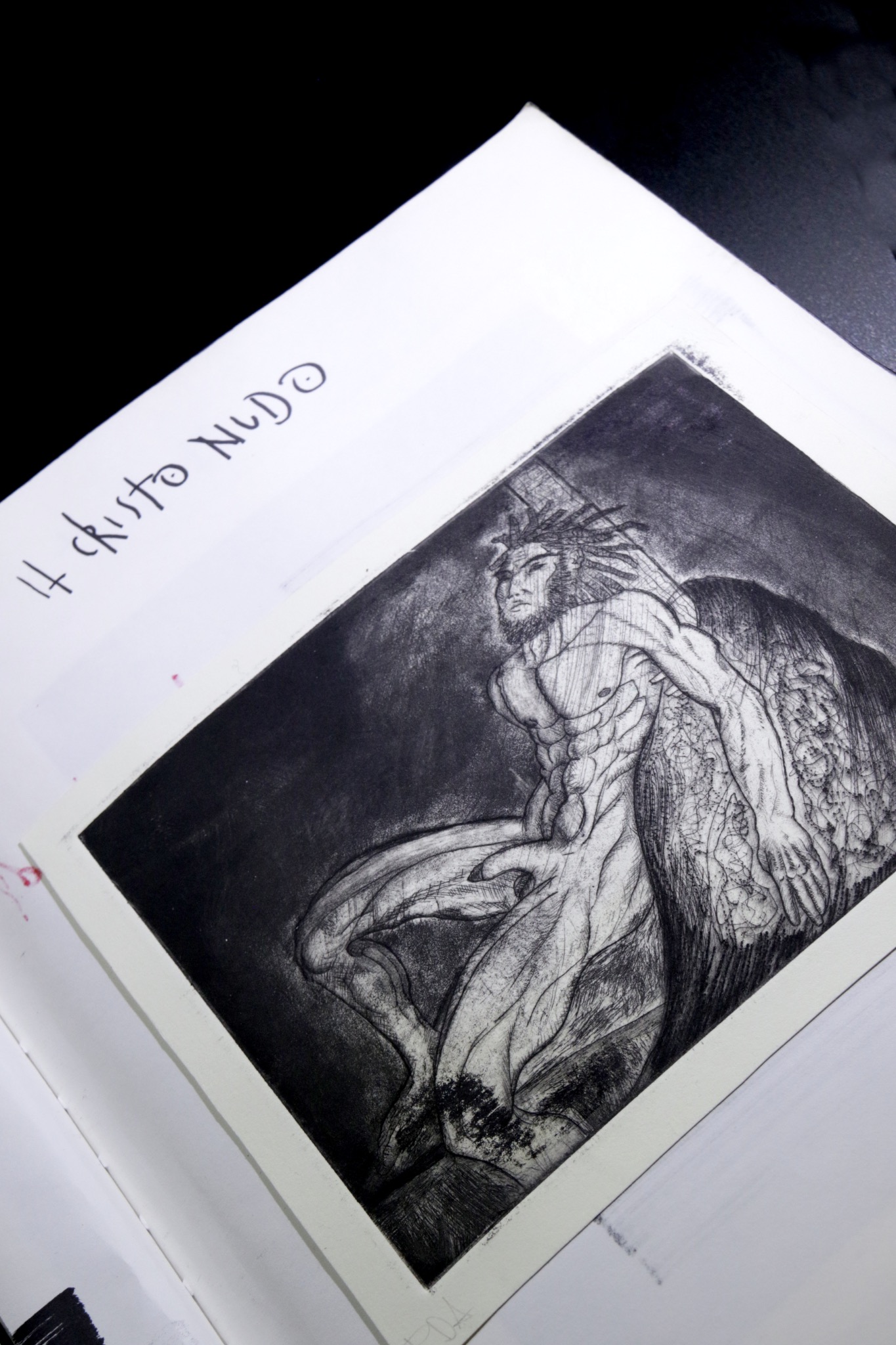
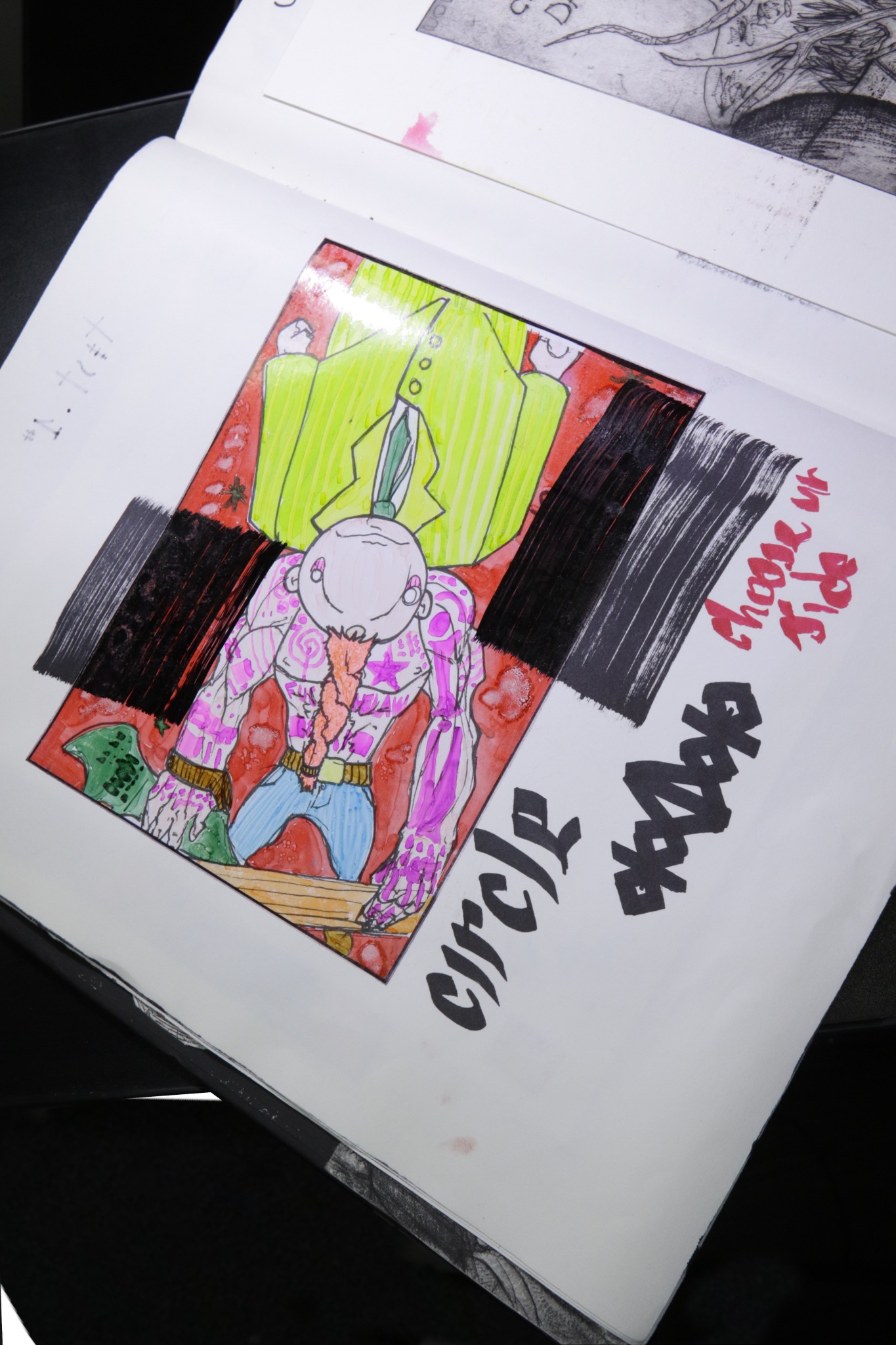
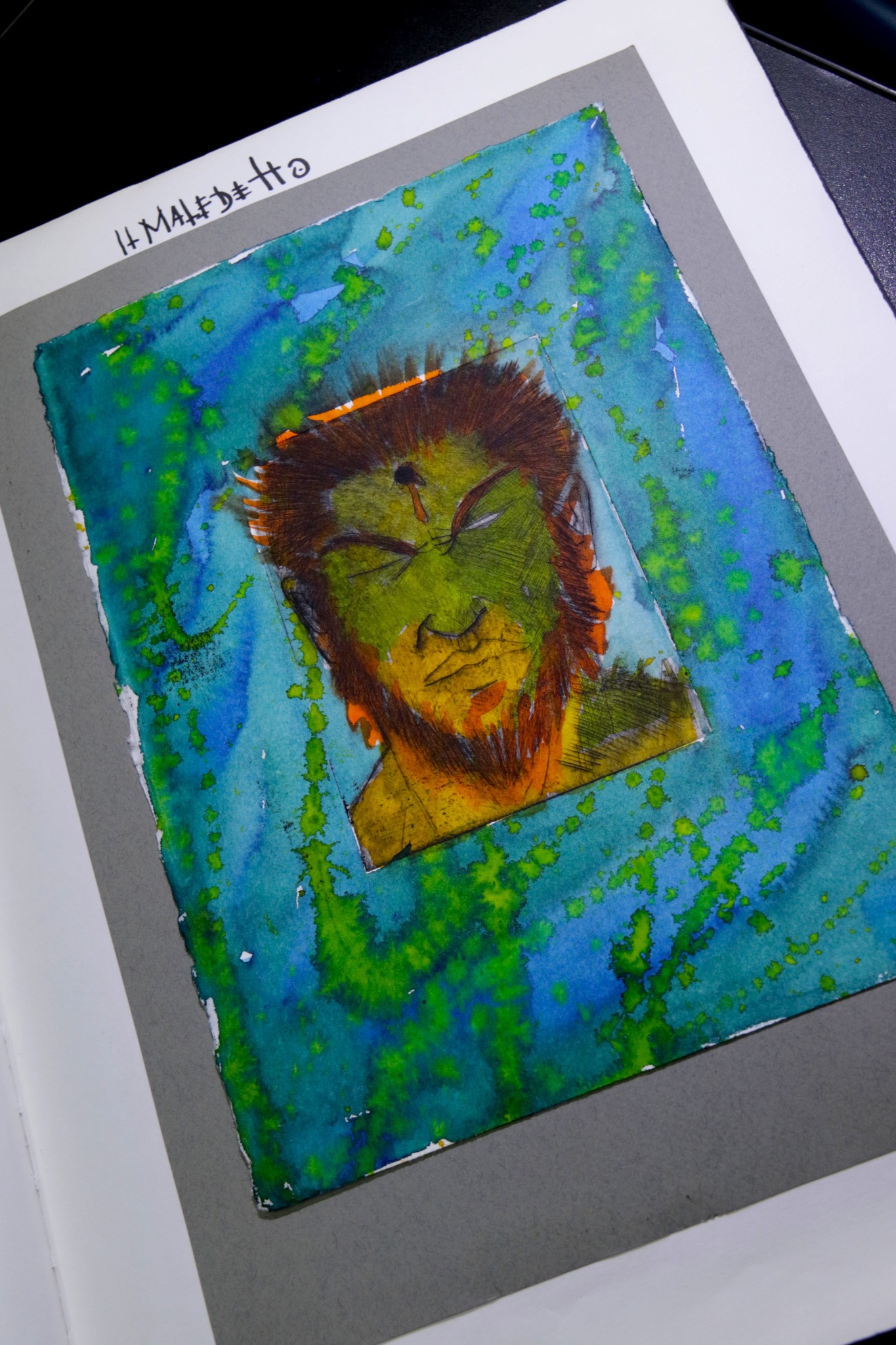
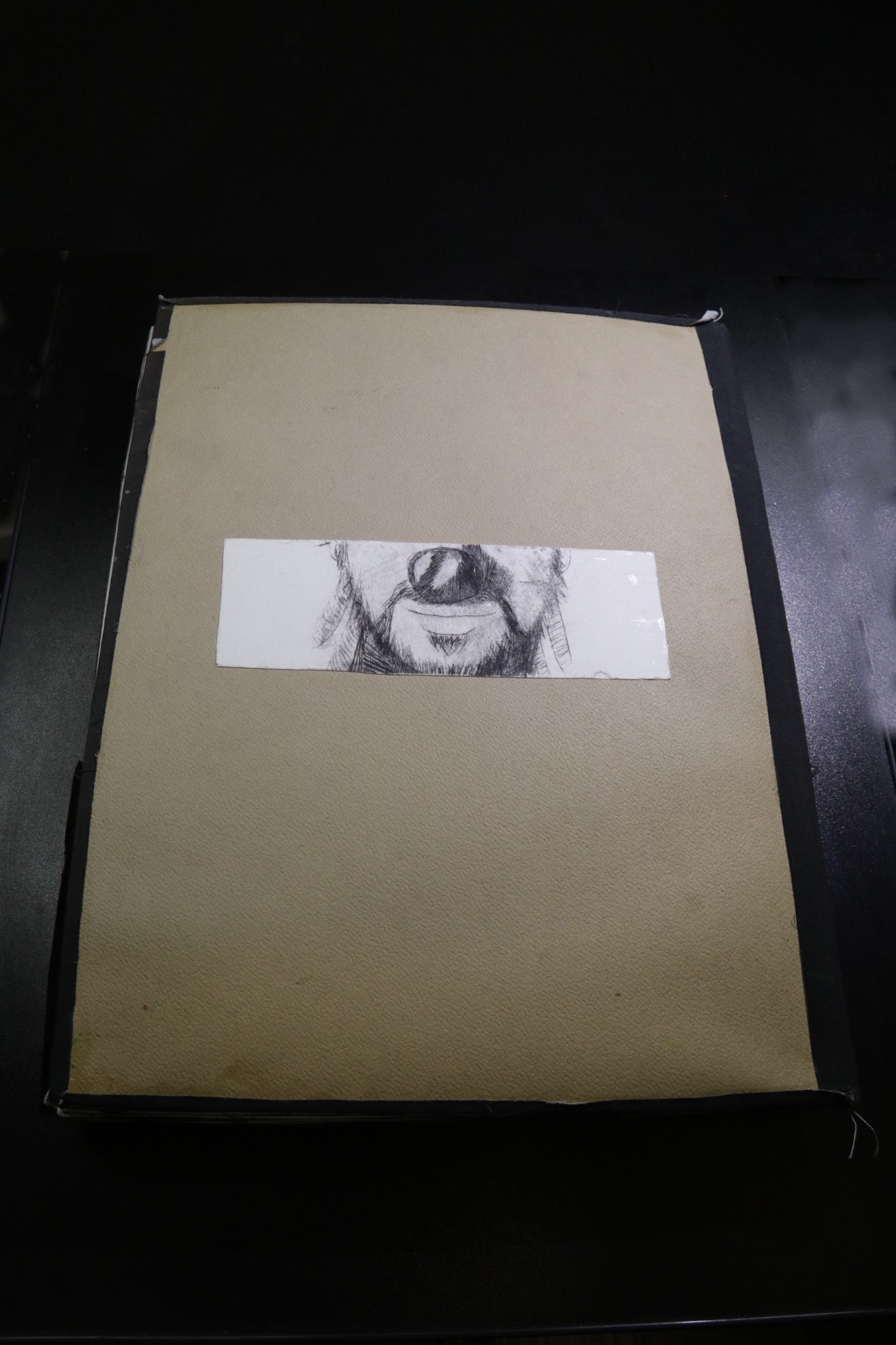
Just Another Fish is a handmade and handbound book of 100 pages produced between 2013 and 2016, gathering my etchings, acqueforti, and a large part of my visual experimentation from that period. It is a book of prints, but also a space for experiments in technique, philosophy, and recurring figures that were important in my language at the time. Among them are my Circle Godog characters, heads with two bodies, usually built through opposites such as young and old, moustache and beard, or other paired conditions, sometimes playful and sometimes much heavier.
The book also includes experiments with paper marbling. For that process, I created a special table myself: a kind of light table sealed with glass on top, so I could pour liquid onto the surface and then place thick paper over it to capture and imprint the pattern. That method became another way of building the book physically, adding layers of texture, chance, and material transformation to the work.
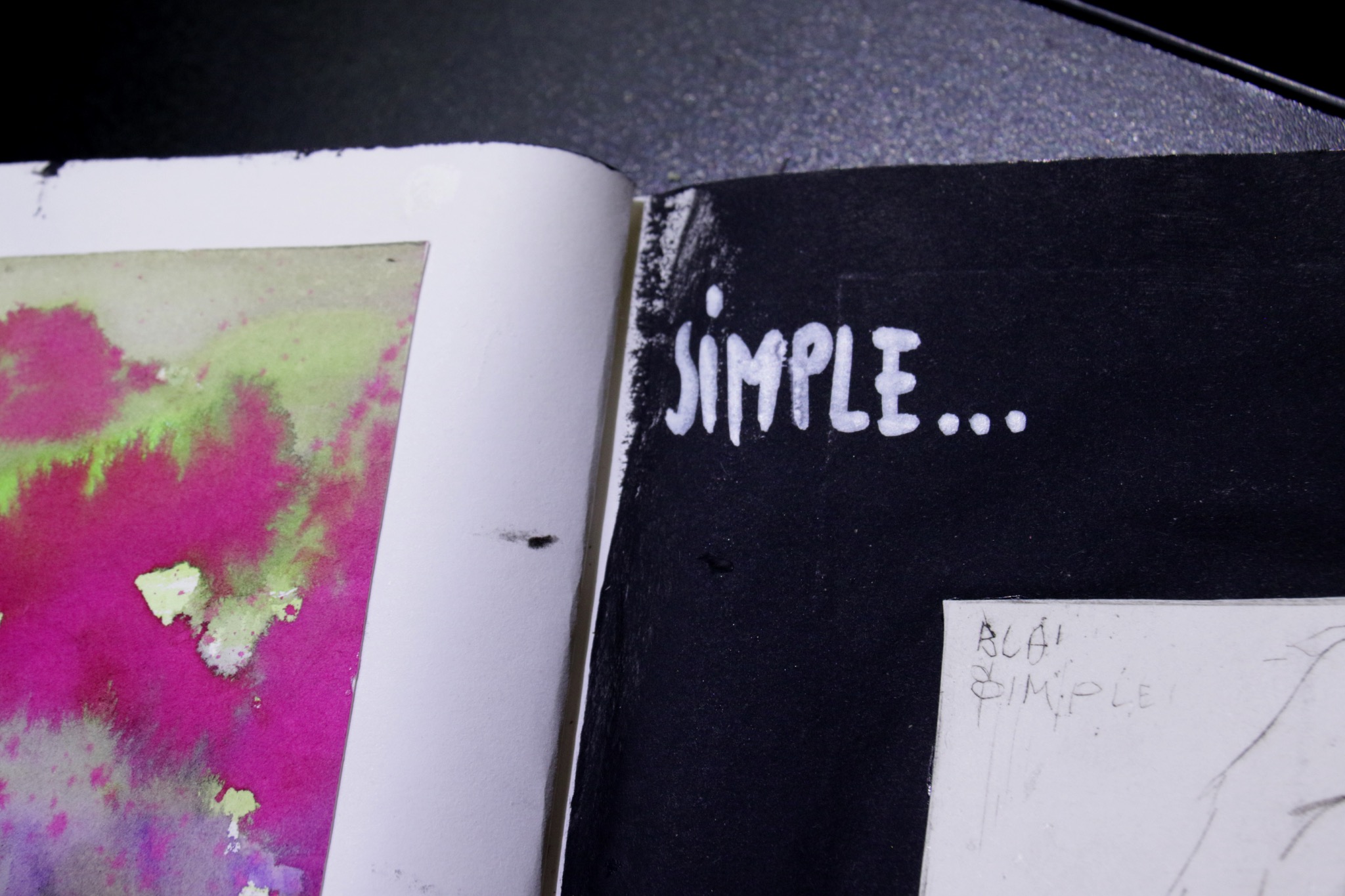
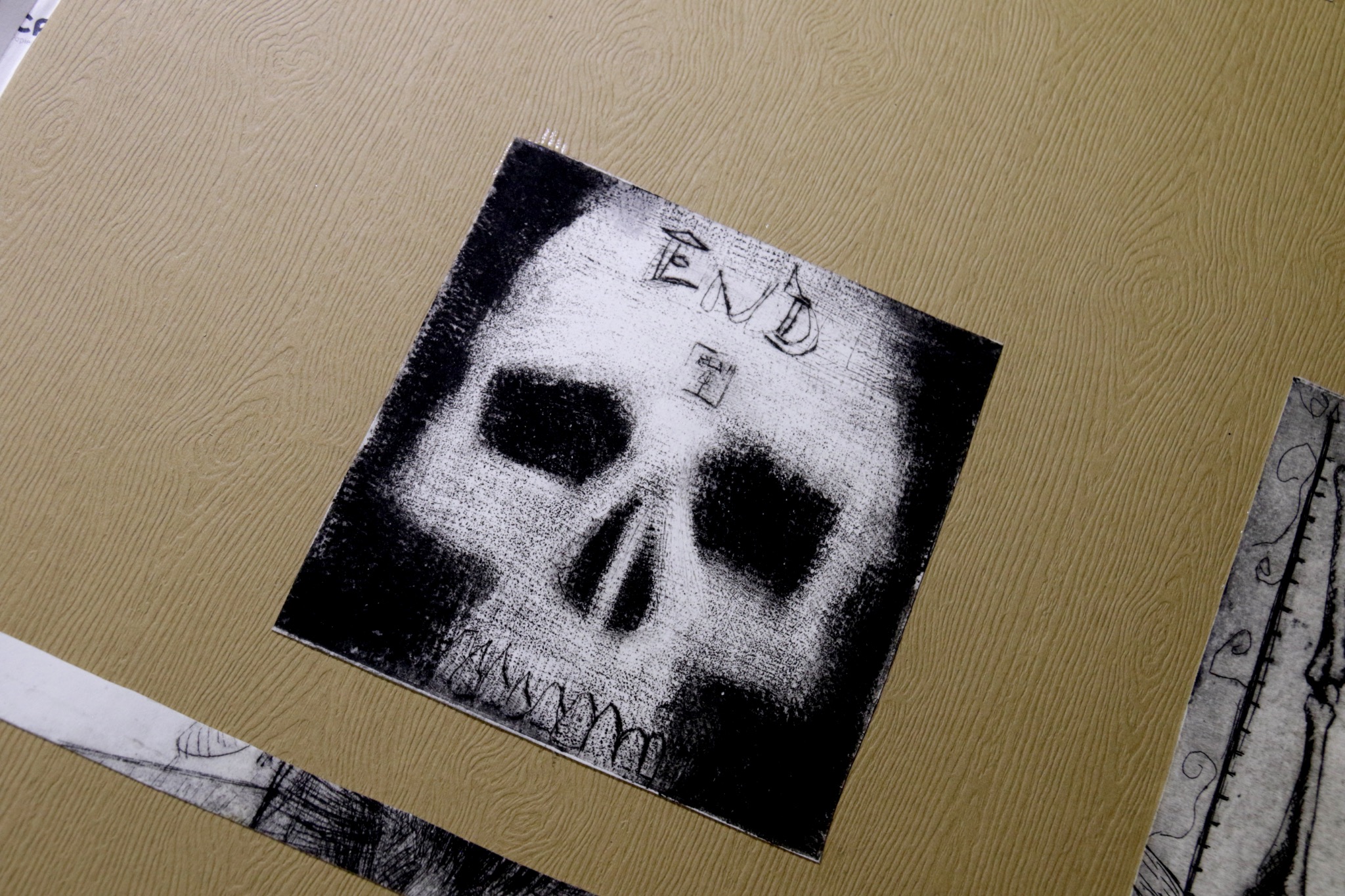
Inside the book there is also the project Simple, an etching project made with only one single plate matrix, which for me was both a technical and philosophical reflection on simplicity in drawing and in life. The idea behind it is almost paradoxical: what is simple is complicated, and what is complicated is relatively simple. What looks simple is often the hardest thing to do well, while what looks more complex can sometimes give more room for error, correction, and transformation.
The composition shows a baby eating a biscuit. At the beginning, the biscuit is whole. As the sequence goes on, it gets eaten, but at the same time the figure grows older, and eating becomes more difficult. So the action does not move in a straight line toward disappearance. Instead, the biscuit ends up returning whole again when the figure is finally dead, as if the cycle had reset itself in a cruel and silent way. In this sense, the work is not only about consumption, but about the strange relationship between time, ability, and mortality.
A baby face, for example, may require only a few lines, but if those lines are not placed in exactly the right way, the drawing immediately ages. In that sense, fewer signs demand greater precision. The more signs you add, the more complicated the drawing becomes, but also, in a way, the easier it is to survive mistakes, because extra lines can correct, hide, or absorb one another. So simplicity is merciless, while complication can be more forgiving.
That paradox became the real heart of Simple. Graphically, I let the baby face grow older through the sequence of images until the final piece becomes a dead figure, while the biscuit, instead of simply vanishing, returns to its original whole form. That reversal matters, because it turns the act of eating into something deeper than a simple progression. The body is consumed by time, while the object survives, resets, and outlasts the one who wanted it. Technically, the project also reflects the nature of etching itself: to create deep black, you need to work the plate intensely, using tools and repeated marks to build density, while the white emerges through a different intervention, through closure, restraint, or protection of the surface. So the whole thing becomes a dialogue between black and white, addition and subtraction, simplicity and complication, life and death, consumption and return.
That is why Just Another Fish matters to me as more than an archive. It is a book about process, contradiction, and growth. It holds together images, ideas, and technical explorations from several years, while also showing how a seemingly simple concept can open into something much deeper. And the book is not closed in the past either: the last 12 pages were actually filled in 2026, at the same time I was writing this description. So the work spans more than a decade, carrying not only who I was when it began, but also who I had become by the time it continued.